Rug Backing Types, Explained: Latex, Felt, Woven and Jute
Latex, felt, woven or jute: what a rug backing does to the floor underneath, how long it lasts, and the signs it is failing.
The Calm Finds editorial desk · Published Oct 9, 2026 · Updated Oct 12, 2026 · 5 min
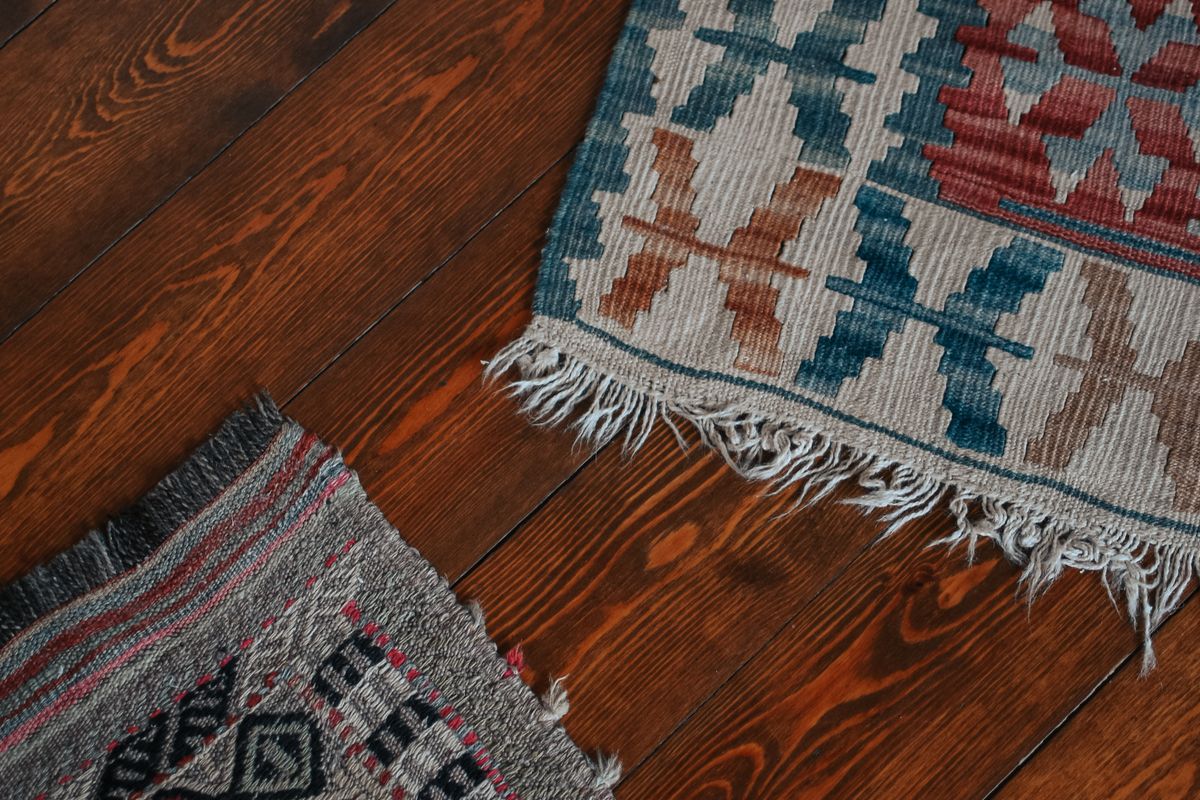
The backing is the part of a rug nobody photographs and the part that decides how the rug dies. Faces fade; backings fail. What it is made of decides whether the rug grips or slides, whether it marks the floor, and whether it survives year eight.
What a backing is actually doing
It has two jobs. Structure: on a tufted rug the yarn is punched through a woven primary backing and a latex layer coated over the back locks the tufts in place. Interface: the backing touches the floor, so it decides slide, grip and how much moisture gets trapped underneath.
The rough woven sheet laminated over the latex is a secondary backing. Hand-tufted rugs use the latex layer alone; woven rugs — kilims, dhurries, flatweaves — have neither, because the weave is the structure. The terminology list separates them, and the distinction shows up in the failure modes below.
The four backings
| Backing | How it is made | Where it shows up | Failure mode |
|---|---|---|---|
| Latex | Coated adhesive layer over a tufted rug | Most machine-made cut-pile rugs | Oxidises, embrittles, powders, delaminates |
| Felt | Needled fibre sheet | Hand-tufted rugs, some flatweaves | Compresses flat, sheds fibre, slides |
| Woven | The weave itself | Kilims, dhurries, flatweaves | Edge fraying where feet catch |
| Jute | Woven natural-fibre backing | Natural-look and wool-face rugs | Coarsens, stains, holds moisture |
Latex is usually a styrene-butadiene compound. It oxidises with age: the layer loses flexibility, turns brittle, and sheds a fine powder when you flex a corner. Published estimates for carpet latex run in the ten-to-twenty-year range, but a rug sees more moisture than a carpet, and damp pulls that number down faster than traffic.
Felt is a needled sheet, common on hand-tufted rugs. It gives body and a soft interface, but felt alone on a polished floor slides and compresses under furniture legs — it wants a pad under it more than any other backing.
Woven has no glue to fail, which is the whole appeal; the failure mode is mechanical, the weft fraying where a doorway or vacuum repeatedly catches it.
Jute is a stiff, coarse backing often paired with wool faces. It grips well and adds bulk, but it is absorbent — wrong for a bathroom or an entryway that stays wet.
What the backing does to the floor
Latex and rubber backings can mark or discolour hardwood finishes; a rug that stays damp on a sealed floor is the usual setting. A pad between rug and floor is the standard fix: the latex contacts the pad, not the finish. The underlay guide covers what that pad should be made of — felt, felt-plus-rubber, or a breathable mesh for damp floors.
Reading the signs
- Fine tan or grey powder where the rug sat — failed latex.
- A backing gone yellow, brown or stiff.
- The rug sticking to the floor, leaving residue when lifted.
- Layers separating at a corner or edge.
- Tufts pulling out under the vacuum in clumps.
What actually extends backing life
Keep it dry. The EPA and CDC both advise drying wet materials within 24 to 48 hours, and the window applies to a soaked rug as much as to a carpet: dried inside two days it survives, left damp for a week it often does not. Do not soak-wash a latex-backed rug: wet latex is the same failure, accelerated. When powder appears everywhere you lift a corner, the rug has reached the end of its structural life; repair money stops making sense.
Frequently asked
- How long should a latex rug backing last?
- Published estimates for carpet latex run in the ten-to-twenty-year range, and a rug usually sees more moisture than a carpet does — bathrooms, kitchens, spilled drinks. Heat and damp pull the number down faster than traffic does. When the backing powders under a flex test, the rug has reached the end of its structural life regardless of age.
- Can a latex-backed rug damage a hardwood floor?
- It can mark or discolour the finish, which is why a separate pad between rug and floor is the standard fix rather than an optional extra. The pad also gives the rug a sacrificial layer: the latex contacts the pad, not the finish, and the pad is the cheap part to replace.
- Do woven rugs need a backing at all?
- No. A kilim, dhurrie or flatweave is its own backing — the weave holds the structure, so there is no glue layer to fail. The trade-off is edge control: without a selvage or bound edge the weft can fray where feet catch it, which is why flatweaves are usually sold with a machine-stitched border.