Washing Curtains by Fabric: Cotton, Linen, Polyester and Blackout
How to wash cotton, linen, polyester and blackout curtains without shrinkage or flaking: temperatures, construction checks and rehanging damp.
The Calm Finds editorial desk · Published Oct 11, 2026 · Updated Oct 12, 2026 · 5 min
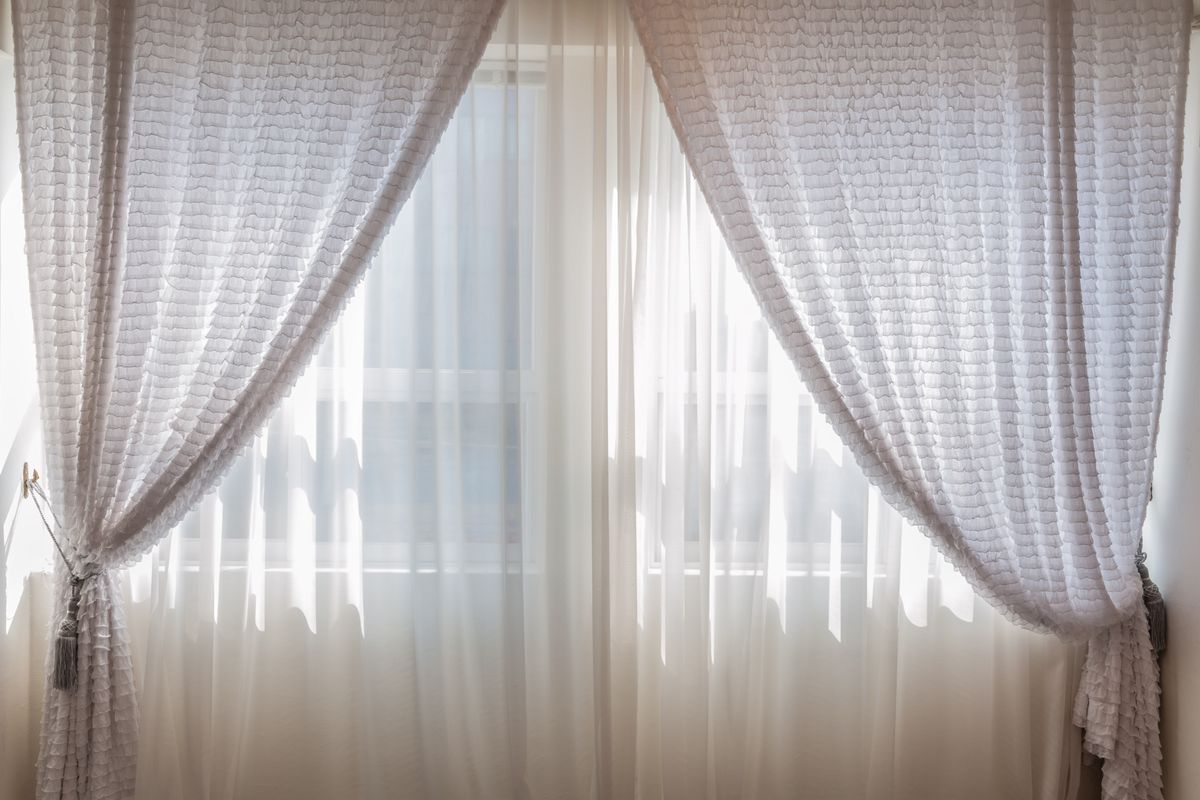
Curtains fail in the wash more often than they fail on the rod. Almost every ruined panel died of the same three things: hot water, a tumble dryer, or the wrong assumption about what the fabric was. The care label is the ceiling — the notes below explain what the labels are protecting.
Why the first wash is the risky one
Untreated cotton and linen curtains commonly shrink 3–5% on the first wash, a figure consistent across manufacturer care guidance and published textile references. Heat and agitation are the levers: cold water, a gentle cycle and no dryer keep the movement small. Pre-shrunk or sanforized fabric has had the tension relaxed before it reaches you, so the movement is smaller — but not zero.
Cotton and linen
Cold to 30 °C on a gentle cycle, one or two panels per load, mild detergent. Remove hooks and rings first — metal marks fabric and snags it. For linen, expect creases; linen hangs out most of them if it goes back on the rod damp. Iron damp, on the wrong side, at the linen setting. Where the label says dry clean, believe it: linen drapery faces are often sized, and washing undoes the finish.
Polyester
The easiest panel in the room. Cold to 30 °C gentle, minimal shrinkage, wrinkles drop out on the rod. Iron low if at all; high heat can glaze polyester. Skip fabric softener — it coats the fibre and dulls the finish.
Blackout: check the back before anything else
The fabric on the front tells you nothing. Turn the panel over:
- A smooth, shiny or rubbery back is a coating — foam, acrylic or rubber — applied over the fabric. That coating is what blocks the light, and heat, agitation and solvents all attack it. Spot clean it. Hand wash cold if it must be washed. Never tumble dry, never iron the coated side: heat cracks and peels the layer, and the damage is permanent.
- A back that looks like fabric — the same weave as the front, or a lighter liner sewn in — is a woven or triple-weave blackout. Those wash cold on a gentle cycle like any other polyester panel.
If the label is gone, test a hidden corner: a drop of cold water and mild detergent, left a few minutes, then blotted. Coating that transfers to your fingers will not survive a wash.
| Fabric | Water | First-wash shrinkage | Dryer |
|---|---|---|---|
| Cotton, untreated | Cold–30 °C gentle | 3–5% | No |
| Linen | Cold–30 °C gentle | 3–5% | No |
| Polyester | Cold–30 °C gentle | Minimal | Low, only if the label allows |
| Blackout, coated | Spot clean; hand wash cold | — | Never |
| Blackout, woven | Cold–30 °C gentle | Minimal | No |
Rehang damp, always
The final step is the one most often skipped: put the panels back on the rod while still damp. Gravity pulls the wrinkles out as the fabric dries, and the panel finishes in the shape it hangs in. Do not fold a damp coated panel against itself — the coating sticks to itself and peels apart when separated. Between washes, a vacuum with a brush attachment every couple of months does most of the work — more often in kitchens. On windows that condense, the EPA and CDC 24-to-48-hour drying rule applies to the hem as much as to a flooded floor: a hem that stays damp grows mildew. If the panels come back shorter than expected, the drop and ceiling-height arithmetic tells you where the hem should now sit, and what the lining layers contribute explains which layer is worth protecting.
Frequently asked
- What temperature should curtains be washed at?
- Cold to 30 °C on a gentle cycle covers cotton, linen, polyester and sheers. The exceptions are the ones with structure to lose: velvet and lined drapery are often dry-clean only, and coated blackout panels should not go through a machine cycle at all. The care label remains the ceiling — where it is stricter, follow it.
- How much do cotton curtains shrink when washed?
- Untreated cotton and linen commonly shrink 3–5% on the first wash, a figure consistent across manufacturer care guidance and published textile references. Heat and agitation are the levers, so cold water, a gentle cycle and no dryer keep the movement small. Pre-shrunk or sanforized fabric has had the tension relaxed before it reaches you, which reduces but does not eliminate the movement.
- Can you machine wash blackout curtains?
- It depends on the back, not the fabric. A woven or triple-weave blackout — fabric on both sides — washes cold on a gentle cycle like any other panel. A coated back, which feels smooth or rubbery, should be spot cleaned or hand washed cold, and never tumble dried or ironed on the coated side: heat cracks the coating and the damage is permanent.