Throw Weight in GSM, and What the Number Does Not Tell You
GSM measures fabric weight per square metre. It does not measure warmth, thickness or durability. What the figure covers, what it leaves out, and how to use it.
The Calm Finds editorial desk · Published Oct 19, 2026 · 5 min
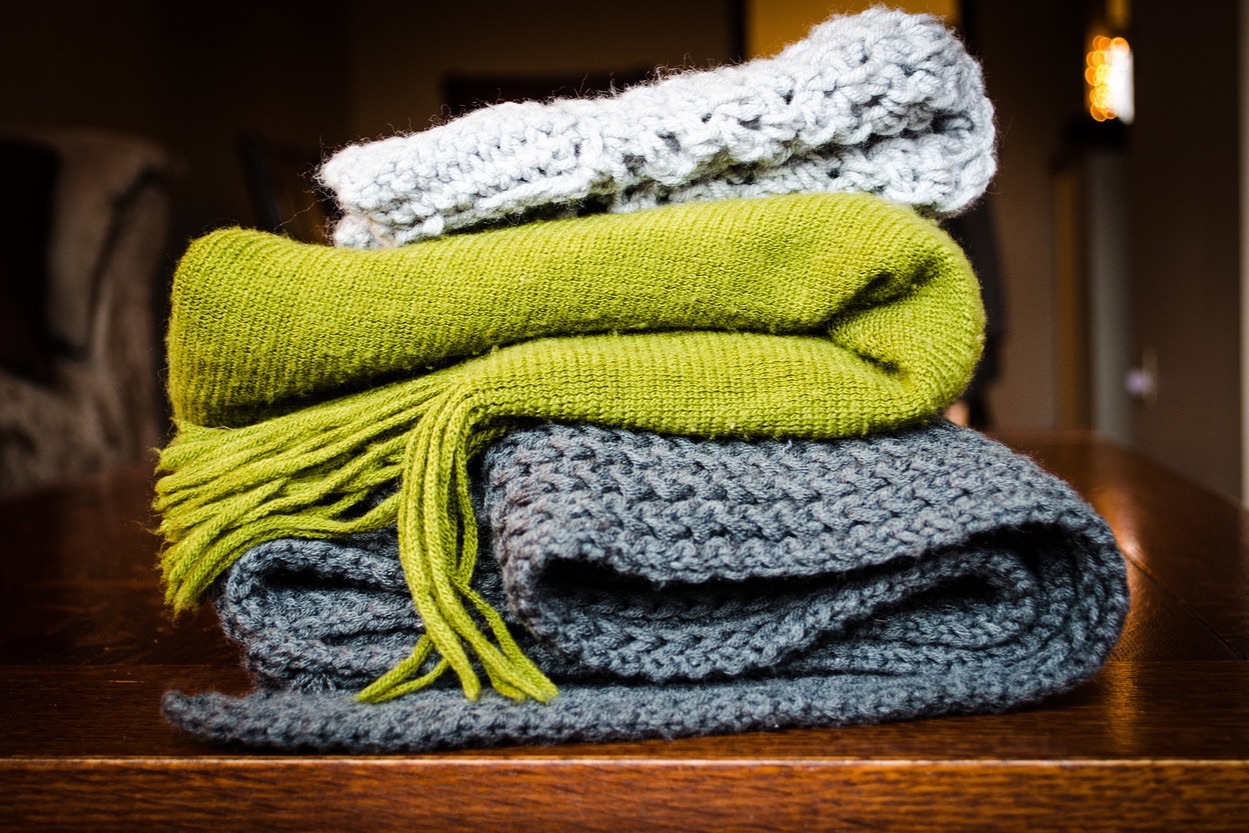
Almost every woven or knitted throw lists a weight in grams per square metre. The figure is real, it is measurable, and it is one of the few textile numbers a product page publishes without much room to bend it. The mistake is reading it as warmth, thickness or toughness, because on its own it is none of those.
What GSM actually measures
GSM is mass per unit area: a 400 GSM fabric carries 400 grams in every square metre, whatever the fibre. Published fabric-testing standards describe the same operation — cutting a swatch of known area, weighing it, and scaling the result — so the number itself is trustworthy in a way most comfort claims are not.
What it describes is the fabric, not the object. Fringe, tassels, sewn borders and any filling are outside the figure. And because it is mass divided by area, it says nothing about how that mass is arranged: a heavy loose knit and a heavy dense weave can carry the same figure while trapping entirely different amounts of air, and trapped air is what a throw actually delivers as warmth.
Why two throws at the same GSM feel different
Three things move the felt weight away from the stated one. Fibre density comes first: wool fibre is heavier per volume than most acrylic, so a wool throw at a given GSM is usually thinner than an acrylic one at the same figure. Construction comes second: a loose garter knit spreads its mass over a larger air volume than a tight jersey, which is why chunky knits look enormous for their weight. Finishing comes third: a brushed nap raises surface fibre and adds apparent depth while adding very little mass, which is exactly why a brushed fabric at one GSM can read thicker than a flat weave at a higher one.
Durability sits outside the figure too. Abrasion behavior depends on fibre type and how tightly the yarn is held, so a heavy loose-knit can pill and snag earlier than a lighter tight weave. The comparison in our material breakdown makes the point from the other direction: construction and fibre decide how a throw ages, and GSM alone never will.
Where the figure is genuinely useful
Use GSM to compare like with like. Two brushed cotton throws, or two acrylic wovens of similar construction, can be ranked by weight with reasonable confidence, and that ranking usually tracks drape and warmth within the pair. Cross-category comparisons — a knit against a woven, wool against acrylic — carry almost no information, because the constructions arrange mass too differently.
The other honest use is care. Mass per area is a decent proxy for drying time: a 500 GSM throw holds and releases far more water than a 250 GSM one, which matters if you have nowhere to line-dry it. Our care-cycle walkthrough treats weight as an input to the washing decision for exactly that reason. And if the label prints no GSM at all, the sizing guide still covers the dimensions worth checking before any weight figure would have helped.
Read the number, then read everything around it.
Frequently asked
- Does a higher GSM throw always feel warmer?
- Warmth comes from trapped air, not from mass. A loose chunky knit at 350 GSM can hold more still air than a dense woven at 450 GSM. Read the construction before the number, because the fibre and the knit pattern decide how the weight actually behaves on a sofa.
- What GSM suits a summer throw?
- Roughly 200 to 300 GSM in a cotton or linen-blend flat weave covers most warm-season use, because it sits light on the body and launders fast. Below about 180 GSM the fabric starts behaving like a sheet, and edges and fringes lose their shape sooner.
- Why do two throws both labelled 400 GSM feel so different?
- Because the figure records mass per square metre and nothing else. Fibre density, knit tension, brushing and seam construction all change how the same mass presents. Two different constructions can share one GSM figure and feel nothing alike in the hand.