The Delivery Path, and Why It Decides Whether a Large Rug Works
A nine by twelve rug still has to pass a front door, a hallway turn and a staircase. Measuring the delivery path, roll dimensions and what to ask.
The Calm Finds editorial desk · Published Oct 19, 2026 · 6 min
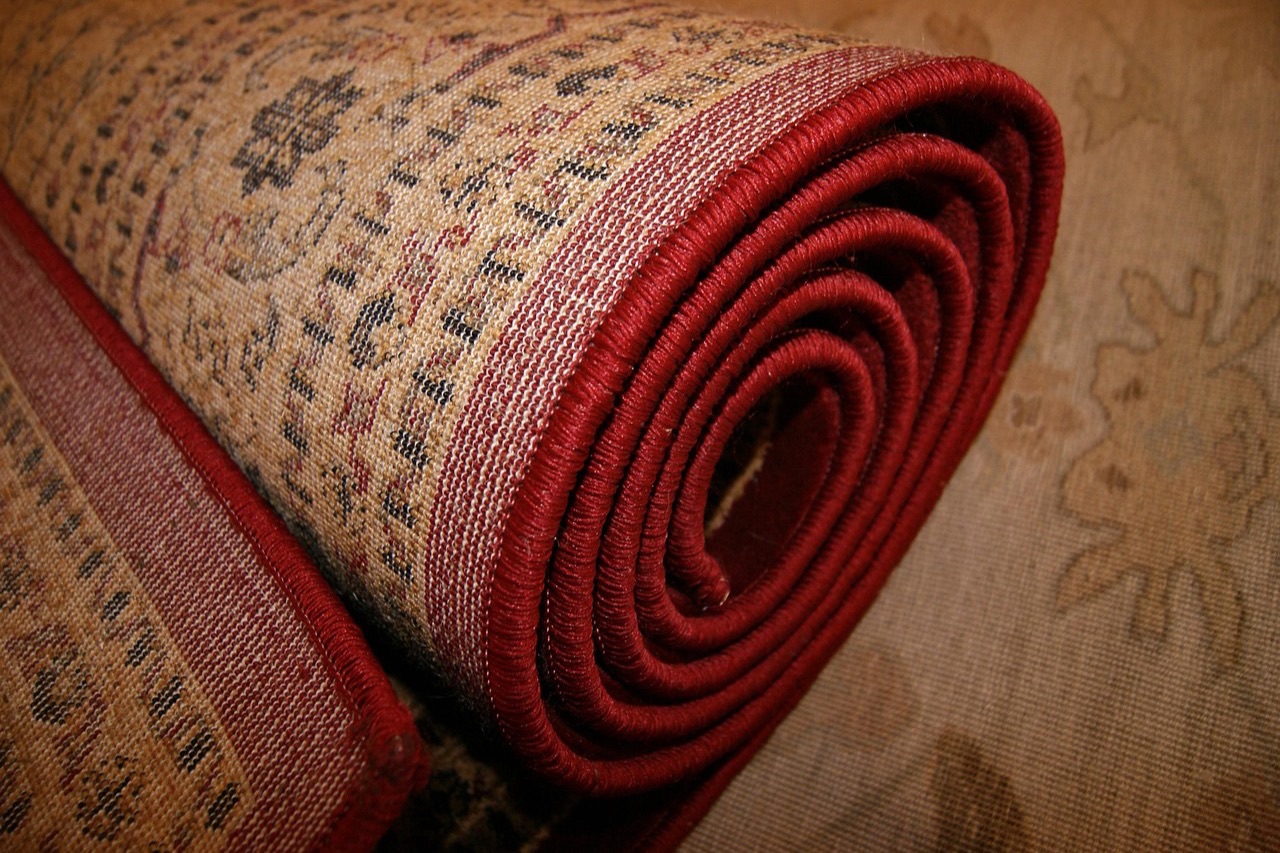
Every sizing guide stops at the room: measure the floor, leave a border, choose the size. The step that gets skipped is the one between the van and the room. A large rolled rug is a rigid object with its own dimensions, and the house it has to pass through was not designed for it. The delivery path fails more nine-by-twelve orders than the room does, and it fails at the last hour.
The three tightest points
The front door comes first, and the number that matters is the clear opening with the door open at ninety degrees — measured from the stop to the door face, minus any hardware that protrudes. The roll goes through on the diagonal, so the opening’s diagonal, not its width, is the true gate. Interior turns come second: every corner between the door and the room needs a run long enough to carry the roll straight, or wide enough to swing it through the angle. Stairs and lifts come third. A lift cabin is judged by its diagonal and its door opening together; a staircase is judged by the landing turn, which has to hold the whole roll length while it pivots.
What a rolled rug actually measures
A rug rolls along one dimension and around the other. Rolled along the long side, the roll’s length equals the rug’s shorter dimension — a nine by twelve becomes a roll roughly nine feet long — and its diameter carries the longer dimension, growing with every turn. Thickness drives that diameter: pile height, backing, density and binding all stack up, which is why a flatweave nine by twelve rolls slimmer than a thick wool one of the same footprint. The comparison is stark enough that pile height, usually a comfort question, becomes a logistics question at this size.
So the room math and the roll math disagree in shape: the room cares about area, the hallway cares about a nine-foot pole with a fat cylinder cross-section. Neither the room diagram nor the spec sheet shows the second set of numbers, which is why they have to be asked for.
What to measure, and what to ask
Measure four things before ordering anything above runner size: the front door’s clear opening and its diagonal; the width and straight-run length of every hallway on the route; the width and turn of each staircase, floor to ceiling at the top; and the lift cabin if there is one. Write them down with the route, because the person carrying the roll will not rediscover them in the moment.
Then ask the seller two questions the product page will not answer: what are the packed or rolled dimensions, and which dimension will the roll run along. Reputable makers can supply both, and the answers either close the question or save an order that was never going to land. If the path is genuinely tight, our room-measuring guide and the room-by-room size breakdown are the companion read for choosing the largest rug the route — not just the floor — can accept, and a round rug sidesteps the long-roll problem entirely, as the round sizing guide explains.
Frequently asked
- Will a nine by twelve rug fit through a standard door?
- Rolled, usually, but rarely with room to spare. A clear door opening of thirty to thirty-two inches sits close to the rolled diameter of a thick nine by twelve. What passes is the roll through the diagonal of the opening, so the packed dimensions from the seller decide the answer, not the rug size alone.
- Which dimension of the roll matters most on stairs?
- The roll length, not the diameter. A staircase turn needs the roll to pivot through the landing, and the pivot space has to fit the full length. On a straight flight the same length must clear floor-to-ceiling height at the top before the turn even starts.
- The path cannot take the roll. What now?
- Work the options in order. Ask whether the maker can roll along the other dimension, which trades roll length for diameter. Check whether a lower-pile construction of the same size rolls slimmer. Step down a size. A rug that cannot physically arrive is not a rug, whatever the room plan says.