Buying a Secondhand Rug: The Ten-Minute Inspection
Used rugs carry their history in five places: smell, bend, back, edge and size. What to check before money changes hands, and which flaws are priced in versus walk a
The Calm Finds editorial desk · Published Oct 2, 2026 · Updated Oct 13, 2026 · 6 min
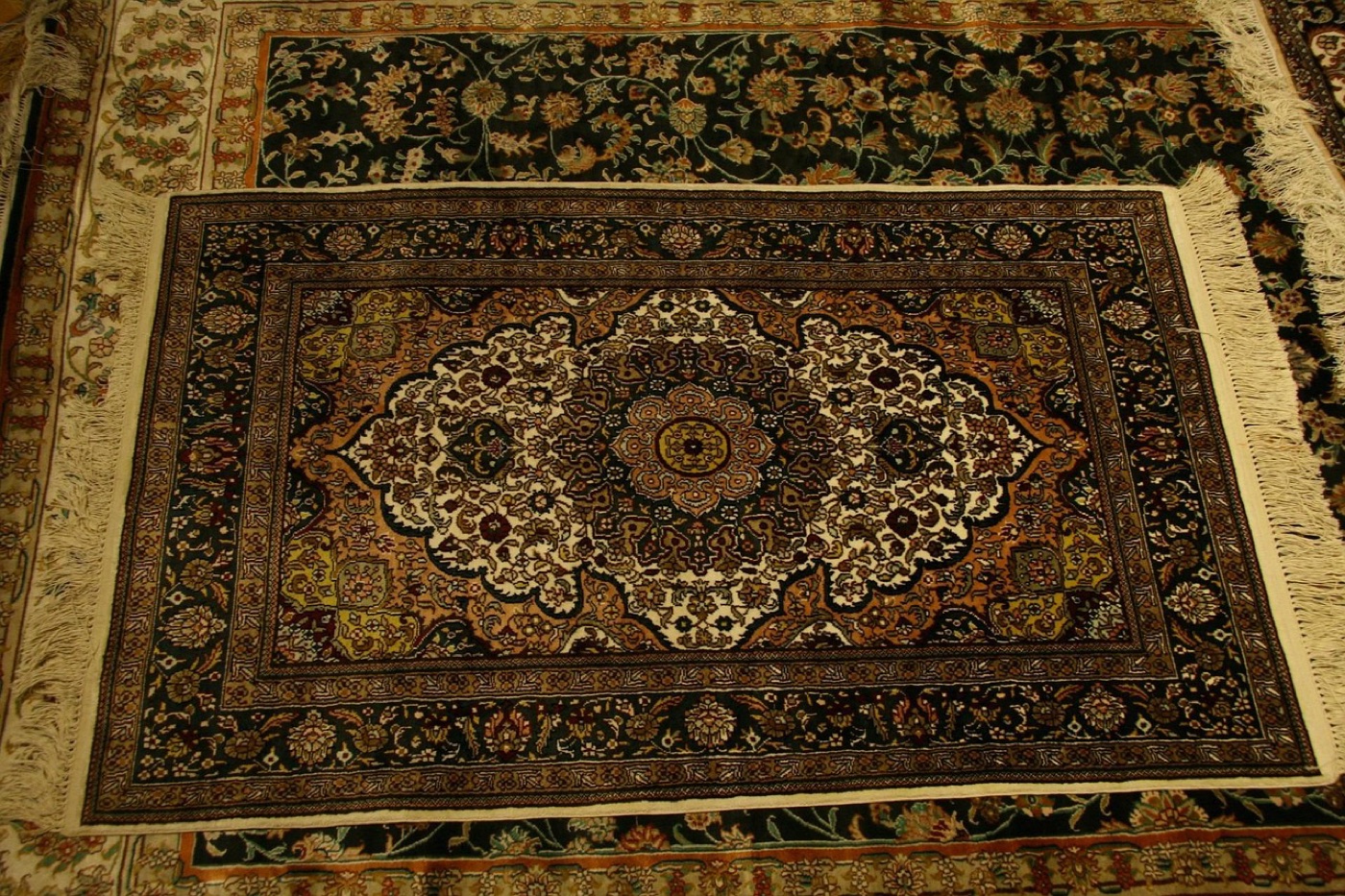
The secondhand rug market is where construction quality stops being a spec sheet and becomes something you can touch. A new rug’s weaknesses are hidden under freshness; a used one has already shown what it is. That makes inspection worth ten minutes, and those ten minutes run through five checks with clear passes and fails.
First: the smell, before anything else
Smell is the fastest honest test and the hardest to fake. Lift the rug, if it is rolled open the inner face, and breathe the middle of it.
Mildew has a specific damp-basement smell that airing does not remove, because the spores and the stain are in the fibre. A rug that smells of it has a wet history, and wet history in wool means possible rot in the foundation threads, which will not survive another decade. Walk away.
Pet urine that reached the foundation has its own signature, sharp and persistent, and it re-activates in humidity forever. Surface-cleanable pet accidents are common and priced-in; foundation-level ones are not fixable at any cost that makes sense. If a rug smells sharply of anything chemical rather than organic, mothballs or strong deodorisers, assume a smell is being managed and inspect harder.
Second: the bend test
Bend a section of the rug back on itself, hard. Three things reveal themselves in one move.
The pile shows its resilience: wool springs open, brittle or latex-stiffened pile creaks and stays creased. The rows show the construction, knots per inch on a hand-knotted piece, the count that prices it, per rug density explained. And the backing shows its state: on a tufted rug, a bend that produces cracking sounds or a powder fall of latex means the glue layer has died, and that rug has a few years left, not decades. Backing construction and its failure modes are in rug backing types explained.
Third: the back, turned over fully
The reverse face is the rug’s medical record. Look along it in good light for four things.
Foundation condition on a hand-knotted rug: the warp and weft threads should look complete, without dry rot, which shows as threads that snap when flexed, and without patch jobs that were not disclosed.
Stain geography: stains on the back mean the spill went through, and through-stains are permanent residents. Back-only discoloration in a ring shape usually means the rug sat on a wet floor, which is milder news.
Moth evidence: larval casings, webbing, and the sandy grit described in moths and rug storage. Moth damage on the back of the pile means the colony worked deep.
Squareness: measure the diagonals. A rug more than a couple of centimetres out of square either shrank from wetting or was never square, and both matter for how it lies.
Fourth: the edges and fringe
Edges take the worst wear and are the cheapest thing to repair, which makes them the best price lever. Frayed serge or binding on an otherwise sound rug is a re-binding job, a routine repair costed in rug edges, binding and serging, and it is a negotiation point, not a deal-breaker.
Machine-stitched fringe that is coming loose is cosmetic. Sewn-on fringe detaching entirely is cosmetic. Fringe that is the continuation of foundation warps and is thinning means the rug is losing its structure at the ends, which is slower news but real.
Fifth: the numbers
Measure it, because used rugs shrink and misdescription is common. Then check the price against what the inspection found. The valuation logic splits hard by construction: hand-knotted wool holds value because the labour is permanent; tufted and machine-made rugs are depreciating goods. A clean used tufted rug at 70 percent off retail is a fair event; a used hand-knotted rug at 70 percent off comparable new price is either a find or a flaw you missed, and the flaw is more likely, so inspect again.
Traffic-path wear, the polished line down a rug’s centre, deserves a final judgement rather than a rule: on dense wool it is honest aging and photographs fine; on a sparse pile it is the beginning of the end, since there is no yarn reserve left. The wear logic follows pile height explained, because height without density has nowhere to wear from.
After the handshake
Every used rug gets one treatment on arrival, regardless of appearance: a full vacuum on both faces, a sun afternoon if the weather allows, and quarantine from the wool textiles already at home until you are sure nothing rode in with it. The first spill or deep clean follows the standing procedure in rug spill first aid, and a used rug that passes its first month clean has told you the inspection was right.
Frequently asked
- What are the deal-breakers when buying a used rug?
- In order of severity: mildew smell that survives airing, because it means wet history and spores; moth damage past the casings stage, where bald patches have formed; a cracked or crumbling latex backing on tufted rugs, which cannot be re-bonded economically; and pet urine that has reached the foundation. Wear, minor stains and repaired edges are negotiable; those four are structural.
- How do I tell a hand-knotted rug from a machine-made one?
- Bend a corner back and look at the foundation. Hand-knotted rugs show individual knots tied onto visible warp threads, and the fringe is a continuation of those warps, not sewn on. Machine-made rugs show a grid backing, often latex-coated, and fringe that is tape or stitched-on. The knot count you can see per inch also gives you the density argument for the price.
- How much should a used rug cost relative to new?
- A well-kept hand-knotted wool rug holds a large share of its value, commonly half or more of comparable new price, because knot count does not depreciate. Machine-made and tufted rugs depreciate like furniture: 50 to 80 percent off retail is normal for clean used condition. A used machine-made rug priced near half of new retail is not a bargain unless the construction was premium to begin with.