Sun Fading: Which Curtain Fabrics Hold Colour and Which Quit
West-facing glass destroys dye on a schedule that depends on fibre and dye method. Why solution-dyed synthetics outlast cotton prints, and what a lining actually pre
The Calm Finds editorial desk · Published Oct 10, 2026 · Updated Oct 13, 2026 · 6 min
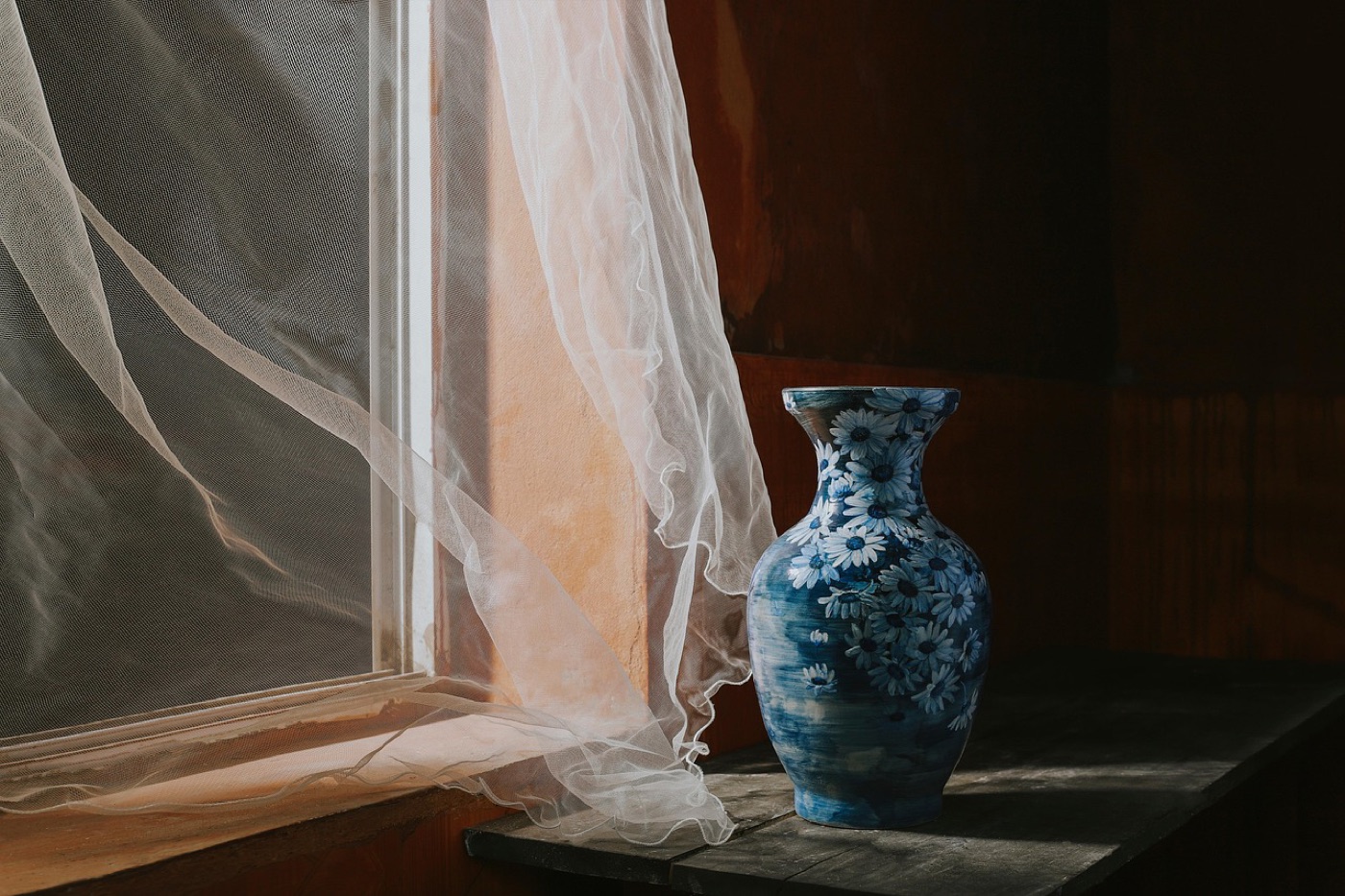
Fading is the curtain failure that arrives as a surprise invoice for taste. The fabric was chosen in a showroom under electric light and is now working a full shift of afternoon sun every day, and the two environments have nothing in common. Which fabrics survive that shift is decided less by price than by how the dye got into the fibre.
What light actually does
Ultraviolet breaks the chemical bonds in dye molecules, and it does so in proportion to dose: hours of exposure times intensity. A south-facing window doses a curtain all day; a west window concentrates the damage into a daily afternoon maximum. The visible result is uneven by construction, worst where light strikes most directly and along fold edges, which catch sun at grazing angles.
Two fibre-side variables decide the timeline. Dye method is the big one: fibre-reactive dyes bonded into cotton fade fastest, pigment prints sit on the surface and fade faster still, while solution-dyed synthetics have colour distributed through the fibre as it is extruded and fade on a scale of years rather than months. Fibre type is second; wool and acrylic hold dye well, cotton and silk quit earliest.
Fabric by fabric
Solution-dyed acrylic and polyester are the endurance category, built for awnings and marine use before they reached curtains. Colour throughout the filament, fade measured in many years of full sun. The trade-off is a slightly industrial hand-feel, though weave quality has narrowed that gap. For hard sun, this is the honest answer.
Linen fades, and fades characteristically: unevenly, softening toward a washed pastel. Some owners treat this as a feature, the sun-bleached look, and it photographs well. The honest caveat is that it is a downward slope; a panel that reads charmingly faded at two years reads patchy at five.
Cotton prints are the fragile category. Reactive-dyed cotton in a full west window can shift visibly inside a year. If the pattern is the point and the window is bright, this is the fabric that needs a lining as a condition of purchase rather than an option.
Velvet and heavy weaves fade slower because their pile and density shade themselves, and fade most visibly along the folds where pile compresses. Wool-blend fabrics hold dye well but are rare at curtain retail prices.
What a lining actually prevents
A lining is a sacrificial UV filter hung in front of the face fabric. Standard cotton lining absorbs much of the damaging spectrum and takes the fade itself; solar and blackout linings filter more, with blackout constructions approaching complete block, and the claims inflation in that category is covered in blackout curtains and light blocking.
The economics are blunt: a lining costs a fraction of the curtains and takes the damage for them. Replacing a lining in year five is a routine job; replacing sun-killed curtains is buying the window twice. Lining types and constructions are compared in curtain lining and layers.
The fade pattern on lined curtains tells the story: face fabric holds colour where the lining covers it and fades at the hem, the leading edge, and the side returns, wherever light wraps past the lining. That wrapping is why leading edges of unlined curtains show the darkest colour loss first.
Placement and habit, the free half
Where the fabric is already chosen, exposure management is the remaining lever.
Sheer underlays take the first hit and are cheap to replace; a voile layer in front of a valued curtain, in the two-rod setup described in sheer curtains, privacy and light, is both a light diffuser and a UV screen.
Alternating panels, on windows wide enough for pairs, spreads the dose: swap left and right panels seasonally and the fade evens out instead of concentrating on one side.
And closing habits matter on the obvious windows. A west room that sits empty every afternoon is heating and fading an unattended window; the same timing logic that drives the thermal argument in thermal curtains and insulation doubles as fade prevention.
Reading it before you buy
The questions that predict fading are specific, and sales floors rarely volunteer them. Ask how the colour was applied: solution-dyed, yarn-dyed, piece-dyed or printed, in descending order of toughness. Ask what the fabric is rated for outdoors, since anything sold for awnings has already passed the relevant test. And treat a swatch taped to the actual window as the cheapest test in soft furnishings, two weeks of real sun beating any lab claim; the swatch habit is worth building across the whole purchase in order the swatch first.
Washing finishes the care loop, since sun-stressed fibres are also the ones most weakened by harsh cycles; the fabric-by-fabric rules sit in washing curtains by fabric.
Frequently asked
- How long before curtains fade in a sunny window?
- Cotton prints on a full-sun west window can show visible fading within 6 to 12 months. Linen fades more slowly and unevenly, and wool-blend or solution-dyed synthetic fabrics can hold colour for several years in the same exposure. The deciding variables are dye method and UV dose, not price; some expensive printed linens fade faster than cheap solution-dyed polyester.
- Do curtain linings prevent fading?
- A quality lining blocks the great majority of UV reaching the face fabric, and it is the single most effective protection available. Standard cotton lining blocks much of the damage; a dedicated solar or blackout lining blocks more. The fade you still see on lined curtains concentrates at hems and side returns, where light wraps around the lining edge.
- Can faded curtains be restored?
- No. Fading is dye molecules broken by UV, and no washing, dye bath or treatment reliably restores an even colour across a faded panel. Re-dyeing almost never matches because the fade is uneven by nature. Prevention is the only intervention that works, which is why lining and placement decisions belong at purchase, not later.